The Book Series & Adaptations That Are Better on the Screen
Every avid reader knows the trepidation that comes with a beloved book hitting the screen. Will it capture the magic? Will the characters feel right? More often than not, the answer is a shrug, or perhaps a sigh of "it was okay." But then there are those rare, sublime instances when "The Book Series & Adaptations" transcends its printed origins, not just doing justice to the source material but elevating it into something truly unforgettable. These are the shows that expand on incidental details, deepen character arcs, or simply find a visual language so compelling it redefines the story for a whole new generation.
Forget the notion that the book is always better. In this guide, we'll explore the standout examples where television adaptations didn't just meet expectations but soared past them, proving that sometimes, the screen truly can bring a story to a richer, more vibrant life.
At a Glance: Why Some Adaptations Shine Brighter
- Casting Gold: The right actor can make a character indelible, even surpassing the author's original vision.
- Visual Grandeur: Television can build worlds, showcase fashion, and stage action in ways prose can only hint at.
- Expanded Narratives: Mini-series and multi-season shows can delve deeper, explore subplots, and flesh out themes.
- Modern Relevance: Adaptations can update stories with contemporary sensibilities, addressing diversity or societal issues.
- Authorial Blessing: When the original author champions the adaptation, it speaks volumes about its quality.
- Focused Storytelling: Sometimes, a sprawling novel can benefit from a screenwriter's sharp focus, extracting the core essence.
The Art of Transformation: Reimagining the Core Story
Some of the most successful adaptations aren't afraid to take creative liberties, understanding that a direct page-to-screen translation isn't always best. Instead, they embrace the new medium, using its unique strengths to enrich the narrative, characters, and thematic depth.
Bridgerton: A Regency Romance Reimagined
Julia Quinn’s Bridgerton novels are delightful Regency-era romances, but Netflix��s adaptation, which premiered in 2020, took the genre to a whole new level. The show is a visual feast, overflowing with luxurious décor, vibrant dresses, and stunning floral arrangements that bring the opulence of the era to life in a way books simply can't. More significantly, the series profoundly enhanced representation. Where the books featured exclusively white and straight characters, the Netflix show embraced diversity, showcasing a vibrant, multi-racial Regency London that felt both authentic and refreshing. This bold choice resonated deeply with audiences, proving that beloved stories can be updated to reflect a broader, more inclusive world without sacrificing their core charm.
True Blood: Southern Gothic with Real-World Bite
HBO's True Blood (2008–2014), based on Charlaine Harris’ The Southern Vampire Mysteries, is a prime example of an adaptation that not only did justice to its source material but actively improved upon it. Showrunner Alan Ball and his team elevated Harris’ "workaday" novels with exceptional casting choices, including Anna Paquin as the telepathic Sookie Stackhouse, Stephen Moyer as the brooding vampire Bill Compton, and Alexander Skarsgård as the charismatic Erik Northman. The series masterfully wove in timely subtext about real-world issues like HIV/AIDS, race, and LGBT+ rights, using the supernatural setting to explore human prejudice and acceptance. For its first few seasons, True Blood offered dangerous, exciting, and deeply meaningful television that transcended its pulpy origins.
The Handmaid’s Tale: Expanding a Dystopian Vision
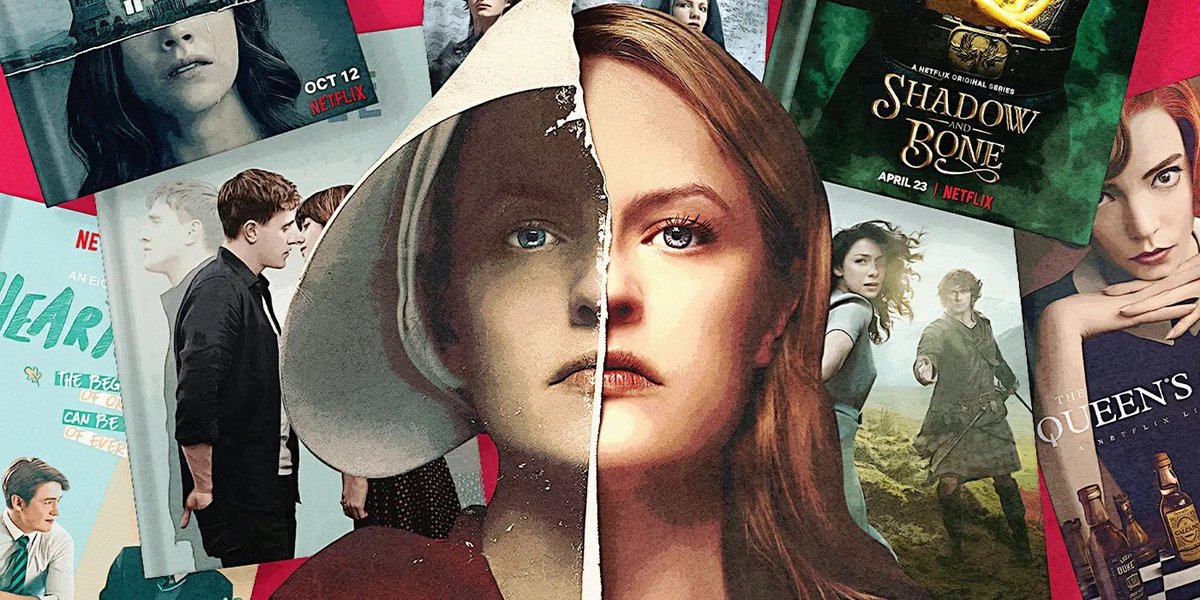
Margaret Atwood's 1985 novel The Handmaid’s Tale is a seminal work of feminist dystopia. Bruce Miller’s Hulu prestige drama (2017–2025), however, achieved something astonishing: it didn't simplify the novel but expanded on it. The series took incidental details from Atwood’s world and developed them into a fully conceived, horrifying reality, building out the oppressive Republic of Gilead and exploring what lay beyond its walls. Star and producer Elisabeth Moss’s visceral portrayal of Offred/June is central to this dark, confrontational, and utterly unsettling series, which delves into themes of control, resistance, and survival with unprecedented depth. The show’s success has been so profound that an adaptation of Atwood’s follow-up novel, The Testaments, is already anticipated, further solidifying its status as a definitive screen version.
Interview With the Vampire: A Sensual Reawakening
Anne Rice’s The Vampire Chronicles redefined vampire lore, and AMC’s Interview With the Vampire (starting 2022) promises to do the same for its screen presence. Rolin Jones’ series, beginning with Rice’s 1976 novel, delves into the "immense sensuality" of its immortal protagonists with an intensity rarely seen. Jacob Anderson as Louis de Pointe du Lac and Sam Reid as Lestat de Lioncourt deliver incredible performances, bringing a fresh, modern, and profoundly intimate exploration of love, power, and vampiric existence. This adaptation captures the gothic romance and philosophical musings of Rice’s work while pushing boundaries, suggesting a vibrant future for the franchise that embraces its inherent complexities.
Iconic Characters: Brought to Life (and Beyond)
Sometimes, an adaptation excels because a particular actor embodies a character so perfectly that they become inseparable from the role, forever shaping how readers and viewers perceive them.
Sharpe: Sean Bean's Indelible Soldier
Bernard Cornwell’s Sharpe novels chronicle the adventures of Richard Sharpe during the Napoleonic Wars. ITV’s Sharpe series (1993–2008) cemented actor Sean Bean in the role, making him so synonymous with the character that Cornwell himself confessed to writing later books specifically with Bean’s voice in mind. This is the ultimate testament to an actor's impact! The adaptation benefited from exemplary casting, featuring talents like Brian Cox and Pete Postlethwaite, and its 90-minute episodes allowed for deep character development and full immersion in the meticulously recreated period setting. The series made Sharpe a household name, largely thanks to Bean's rugged, charismatic portrayal.
The Last Kingdom: Uhtred of Bebbanburg Lives On
Another Bernard Cornwell triumph, The Saxon Stories, found new life in The Last Kingdom (2015–2022), initially on BBC and then Netflix. This series became so powerfully linked to its source material that Cornwell dedicated his final book to actor Alex Dreymon, who portrayed Uhtred of Bebbanburg. Set in the tumultuous 10th century, the show perfectly captured Uhtred's struggle as a Saxon-born, Viking-raised warrior torn between pagan and Christian loyalties. The series is lauded for its excellent ensemble cast and for making Cornwell’s already compelling characters truly indelible on screen, solidifying its place as a historical epic par excellence.
Slow Horses: Gary Oldman's Unforgettable Lamb
Mick Herron’s Slough House series of spy thrillers found its perfect screen counterpart in Apple TV+’s Slow Horses (starting 2022). While Herron’s books are sharp and darkly humorous, Gary Oldman’s performance as the "brilliant but disgusting" MI5 agent Jackson Lamb is nothing short of legendary. Oldman embodies Lamb with a repulsive charm and weary genius that has arguably surpassed the book character, making TV history in the process. The show’s success also stems from showrunner Will Smith’s meticulously close adaptation, featuring sharp comedic writing, a stellar ensemble cast including Jack Lowden and Aimee Ffion-Edwards, and even a theme song by Mick Jagger. It’s a masterclass in translating a unique literary voice to the screen.
Inspector Morse: The Definitive Oxford Detective
Colin Dexter’s Inspector Morse series gave us a brilliant, if curmudgeonly, Oxford detective. But ITV’s Inspector Morse (1987–2000) transformed him into a cultural icon. John Thaw’s portrayal of the ale-and-whisky-drinking, lonely intellectual detective was so profound it eclipsed the book character entirely. Dexter himself heartily approved, even making cameo appearances. The show’s 2-hour episodes functioned like mini-films, allowing ample space for Dexter’s intricate plots and rich character development, making each mystery a deeply satisfying experience.
Smiley’s People: Alec Guinness's Quiet Intensity
John Le Carré’s spy novels are celebrated for their intricate plots and psychological depth. While Tinker, Tailor, Soldier, Spy (1979) was excellent, the 1982 BBC series Smiley’s People, a six-part adaptation of the novel of the same name, saw Sir Alec Guinness return as George Smiley, delivering an even more hands-on and intriguing performance. This series avoided simplifying Le Carré’s complex narrative, instead offering a richer, more active portrayal of Smiley as he investigates a murder, travels extensively, interrogates suspects, and finally confronts his nemesis, Karla. It's considered a supreme example of espionage television, proving that subtlety can be far more captivating than overt action.
I, Claudius: The Roman Empire’s Scheming Core
Robert Graves’ historical novels I, Claudius and Claudius the God were transformed into an all-time classic with Jack Pulman’s 1976 BBC adaptation. Despite its theatrical sets and somewhat dated acting styles, the series endures thanks to its compelling and ambitious storytelling. Derek Jacobi, in a career-defining role as Claudius, leads a phenomenal cast including Siân Phillips, Patrick Stewart, and John Hurt. The show masterfully brought to life the extensive scheming, murder, and double-dealing of the early Roman Empire, demonstrating how powerful performances can elevate even modest production values into an unforgettable narrative experience.
Wolf Hall: Immersive Historical Drama
Hilary Mantel’s meticulously researched Wolf Hall trilogy, chronicling the rise and fall of Henry VIII’s 'fixer' Thomas Cromwell, is a literary masterpiece. The 2015-2024 BBC period drama Wolf Hall matched its brilliance, thanks to enthralling performances from Mark Rylance (Cromwell), Damian Lewis (Henry VIII), and Claire Foy (Anne Boleyn). The genius of this adaptation lay in how writer Peter Straughan and director Peter Kosminsky translated Mantel’s immersive narrative style—where dialogue seamlessly blends into description—to the screen. They effectively recreated the feeling of being right there amidst the characters and action, drawing viewers into the intricate politics and personal stakes of Tudor England.
Epic World-Builders: From Page to Panoramic Vision
Some books present such sprawling worlds and complex narratives that adapting them feels like an impossible task. Yet, a select few rise to the challenge, using the vast canvas of television to create immersive, unforgettable universes.
Game of Thrones: The Last True Watercooler Show
George R. R. Martin’s A Song of Ice and Fire books are a cornerstone of modern fantasy, but HBO’s Game of Thrones (2011–2019) became a global phenomenon, arguably surpassing its still-incomplete source material. With an enormous budget and boundless imagination, the show crafted a saga of Westerosi kings, queens, knights, and dragons that captivated millions. Despite the author’s ongoing writing process, the series created a complete narrative (even if the ending was contentious for some), delivering what many consider the last true "watercooler" TV experience. Its impact was so immense that multiple spinoffs continue to explore the universe, a testament to its cultural significance.
The Expanse: A Future Brought to Gritty Life
James S. A. Corey’s The Expanse series of nine novels, novellas, and short stories presents a sprawling, scientifically grounded vision of humanity's future in the Solar System. The six-season sci-fi drama The Expanse (2015–2022, Syfy and Prime Video) masterfully brought this future to life. It successfully navigated the complex political tensions between Earth, Mars, and the outer planets, alongside the mysteries of alien technology. The show’s commitment to realism, intricate plotting, and compelling characters made it a standout in the sci-fi genre, allowing viewers to truly inhabit its meticulously crafted universe.
Jonathan Strange & Mr Norrell: Magic in Victorian England
Susanna Clarke’s 1,000-page fantasy novel Jonathan Strange and Mr Norrell is a rich, complex pastiche of 19th-century England where magic is real but largely forgotten. The 2015 BBC One miniseries, comprising seven hour-long episodes, managed a remarkable feat: screenwriter Peter Harness and director Toby Haynes extracted the very essence of this vast novel. Despite a limited budget, the series captured the dark story of obsession, ambition, and grief at the heart of the original, bringing its unique blend of historical realism and fantastical wonder to vivid screen life. The visual execution of magic and the subtle performances from Bertie Carvel and Eddie Marsan truly brought the intricate world to fruition.
Shogun: A Thrilling Saga of Feudal Japan
James Clavell’s epic 1975 novel Shōgun was already a classic, famously adapted into a 1980 miniseries. However, FX’s 2024 Shogun took the TV world by storm with its breathtaking scope and detail. Starring Hiroyuki Sanada, Cosmo Jarvis, and Anna Sawai, this thrilling saga of an English sailor navigating the treacherous political landscape of 16th-century Japan is a masterclass in historical drama. Its meticulous production design, compelling performances, and intricate storytelling not only honoured the novel but also elevated its narrative, drawing viewers deeply into its complex cultural clash. What was initially conceived as a complete miniseries is now expected to continue, potentially expanding into Clavell’s wider "Asia Saga."
The Forsyte Saga: A Defining British Drama
Nobel Prize winner John Galsworthy’s The Forsyte Saga series found its definitive screen adaptation in Donald Wilson’s 1967 BBC series. Aired in 26 black-and-white episodes, this adaptation of Galsworthy’s early 20th-century story of the upper middle-class Forsyte family was a groundbreaking success. It became a significant international hit and profoundly shaped subsequent British TV dramas, setting a new standard for literary adaptations and family sagas on the small screen.
The Jewel in the Crown: Confronting Empire
Paul Scott’s The Raj Quartet is a contemplative, multi-perspective story of colonial India in the 1940s. The 1984 ITV drama The Jewel in the Crown, with its 14 episodes, saw writer Ken Taylor carefully streamline this complex narrative. Featuring a tremendous central cast including Art Malik, Tim Piggott-Smith, and Charles Dance, the series was sad, brutal, and unflinchingly dark. It powerfully confronted mainstream British TV viewers with the bloody history of the Empire and the pervasive racism of the era, making it a landmark adaptation for its unflinching portrayal of a difficult historical period.
Deepening the Human Condition: Emotional & Philosophical Expansions
Some adaptations don't just tell a story; they explore profound questions about humanity, grief, connection, and survival, often adding layers of emotional and philosophical depth that enrich the original text.
Station Eleven: Hope in the Aftermath
Emily St. John Mandel’s novel Station Eleven is a poignant exploration of humanity and art in the wake of a civilization-ending flu pandemic. The 2021 Max miniseries proved to be a visually stunning and emotionally affecting adaptation. It beautifully interweaves disparate storylines across the apocalypse and "before-times," featuring a traveling Shakespeare symphony, a mysteriously preserved airport community, and a fictional comic book that ties everything together. The adaptation’s subtle toning down of one cultish storyline from the novel allowed for a more universal focus on resilience, connection, and the enduring power of creation amidst devastation, making it a profoundly moving experience.
The Leftovers: Exploring Unanswerable Questions
Tom Perrotta’s novel The Leftovers examines the aftermath of a mysterious event where two percent of the world’s population vanished without a trace. HBO’s drama (2014–2017) began by covering the entire book in its first season, delivering an incredibly powerful and often depressing viewing experience. However, it was in subsequent seasons that Perrotta and co-creator Damon Lindelof truly soared. They expanded on the initial concept, delving deeper into the cultural, personal, and spiritual implications of the "Sudden Departure" with remarkable bravery and creativity. This expansion transformed The Leftovers into one of the best HBO dramas, and by extension, one of the best TV dramas of all time, for its unflinching exploration of grief, faith, and the search for meaning in an inexplicable world.
Hannibal: Decadent, Bloody, and Bleak Genius
Thomas Harris’s The Hannibal Lecter series (including Red Dragon, The Silence of the Lambs, and Hannibal) introduced the world to one of literature's most chilling villains. While films have explored these stories, Bryan Fuller’s NBC series Hannibal (2013–2015) stands out as the adaptation that hues closest to Harris’ gothic vision. This decadent, bloody, and bleak show delved into the psychological torment and morbid artistry of Hannibal Lecter and his complex relationship with FBI profiler Will Graham. Its sophisticated aesthetics, disturbing imagery, and profound exploration of morality and madness made it a unique and unforgettable television experience, surpassing previous attempts to capture Harris's dark genius.
House of Cards (1990): The Original Antihero Blueprint
Michael Dobbs’ House of Cards novels provided the blueprint for the modern political thriller, and Andrew Davies' 1990 BBC adaptation (a three-part series, 12 episodes total) set an incredibly high bar. It meticulously depicted Tory chief whip Francis Urquhart’s Machiavellian rise to power, exploring timeless themes of class, influence, money, evil, and ambition with chilling precision. This original series, alongside its 2014 Netflix US reworking, fundamentally influenced the "golden age antihero" on television, proving that audiences were hungry for complex, despicable, yet utterly watchable characters. It pioneered the adult drama led by morally bankrupt protagonists that would dominate television for years to come.
MASH: War's Absurdity and Humanity
Richard Hooker’s novel Mash: A Novel About Three Army Doctors found its true cultural resonance first in the 1970 movie, and then spectacularly in CBS’s comedy-drama MASH (1972–1983). This Larry Gelbart production, starring Alan Alda and Loretta Swit, transcended its source material to become a monumental television classic. Set in a mobile army surgical hospital (MASH) unit during the Korean War, the series masterfully blended humor with the harrowing realities of war, exploring themes of camaraderie, trauma, and the absurdity of conflict. Its finale was watched by over 125 million people, cementing its status as an undeniable television classic that continues to resonate for its poignant portrayal of the human spirit under immense pressure. It also reminds us that stories about enduring challenges, like those faced by a loyal companion finding their way home, often strike a chord with universal themes of hope and perseverance.
What Makes an Adaptation "Better"? Dissecting the Magic
When an adaptation surpasses its source material, it’s rarely due to a single factor. Instead, it’s a confluence of thoughtful choices that leverage the unique strengths of the screen.
- Inspired Casting: As seen with Sharpe, Inspector Morse, and Slow Horses, the right actor can embody a character so completely that they redefine it. They bring nuances, mannerisms, and a charisma that might be hinted at in the book but become fully realized on screen.
- Visual Storytelling: Books rely on imagination; television brings it to life. Bridgerton's visual splendor, Jonathan Strange & Mr Norrell's magic, or Game of Thrones' epic landscapes demonstrate how production design, cinematography, and special effects can immerse viewers in a world far more directly than prose alone.
- Expanded Narrative & Depth: Unlike a film, a TV series often has dozens of hours to explore a story. The Handmaid’s Tale meticulously built out Gilead, while The Leftovers bravely ventured beyond the book's ending. This allows for deeper character arcs, exploration of minor characters, and a more thorough examination of thematic material.
- Modern Resonance and Relevancy: Adaptations can subtly (or not so subtly) update themes to resonate with contemporary audiences. Bridgerton's diverse cast and True Blood's social commentary are prime examples of how an adaptation can enrich a story by reflecting modern values and discussions.
- Focus and Streamlining: Paradoxically, sometimes improving a book means cutting or focusing its material. A sprawling, dense novel can be distilled by a skilled screenwriter to its core essence, making it more accessible and impactful without losing its soul, as seen with Jonathan Strange & Mr Norrell or The Jewel in the Crown.
- The Author's Blessing (or Collaboration): When an author like Bernard Cornwell or Colin Dexter embraces an adaptation, or even collaborates (like Tom Perrotta with The Leftovers), it often signals a respectful and successful translation of their work.
Avoiding the Pitfalls: Lessons from Adaptations Gone Wrong (Implicitly)
While this article focuses on successes, understanding why some adaptations excel implicitly reveals the common pitfalls. Sticking too rigidly to the source material can lead to bland television, as the strengths of one medium don't always translate. Conversely, straying too far without a clear, purposeful vision can alienate fans and lose the core identity of the story. The best adaptations find that delicate balance, honoring the spirit of the original while fearlessly embracing the new creative opportunities offered by television.
Your Next Great Watch: Finding Your Own "Better" Adaptation
The debate over book vs. screen is endless, and ultimately, personal. The "better" adaptation is the one that captivates you most, moves you deepest, or sparks your imagination beyond what you thought possible. Whether it's the gritty realism of The Expanse, the historical grandeur of Wolf Hall, or the sheer emotional power of Station Eleven, these series prove that television, at its best, is a powerful vehicle for storytelling that can not only honor but elevate its literary ancestors.
So, next time you finish a great book, consider checking out its screen adaptation. You might just discover a new favorite that, against all odds, turns out to be even better than you imagined.